
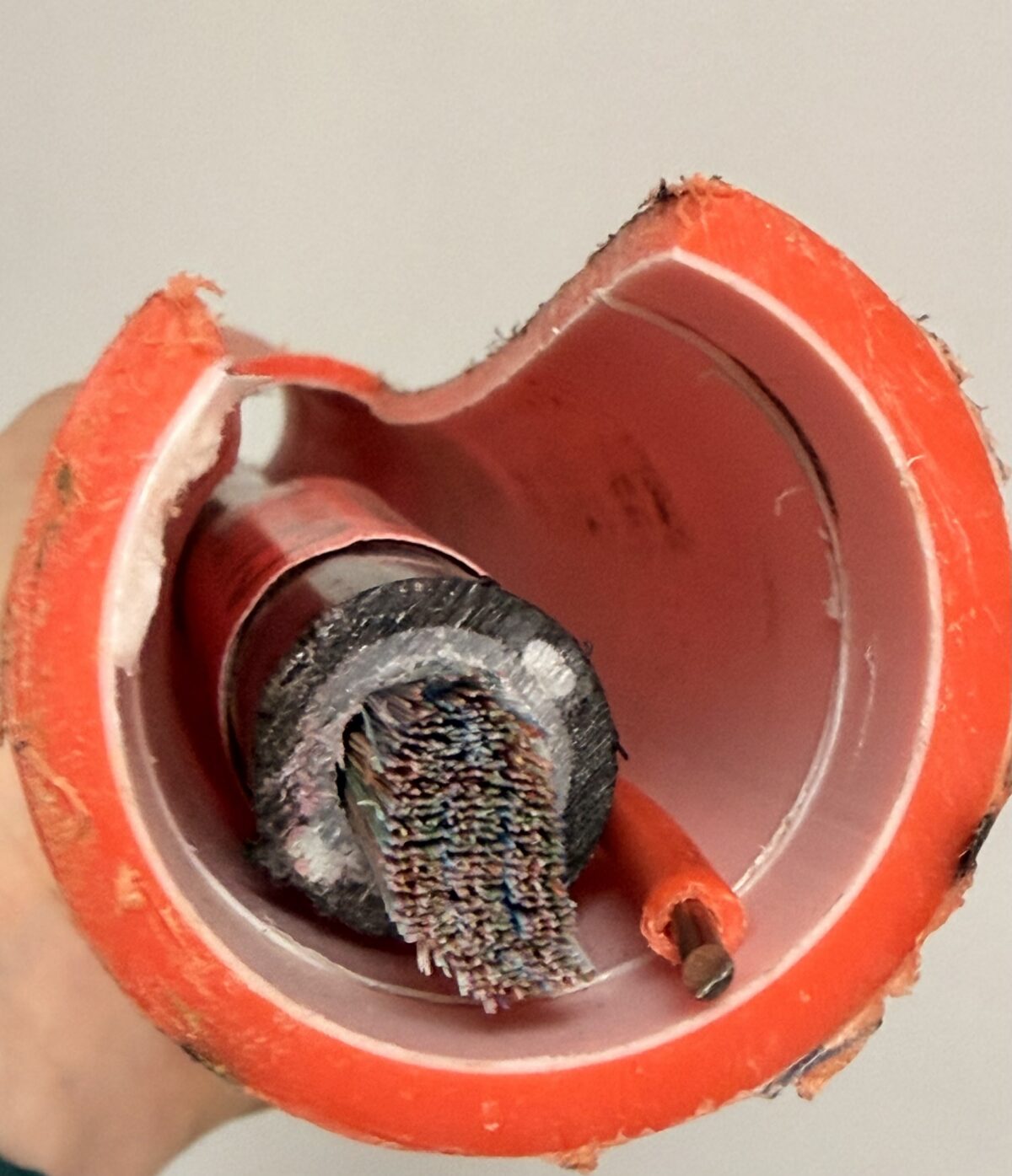
Conduit fill ratio is the concept that a cable of a certain size should only be planned to fill a given conduit to a set level in order to be able to effectively install it. This idea is called conduit fill ratio. Conduit fill ratio is critical because conduit is never completely straight due to bends induced during installation. These bends may come from twists while laying the conduit in a joint trench, depth changes during horizontal drilling, and the bend into handholes and manholes.
The higher the fill ratio of any conduit means that the space inside the conduit is being more fully utilized. Unfortunately, this also means that there is less space around the cable to allow it to be pulled or blown into the conduit. This tradeoff creates a window of fill ratios that balance using as much of the conduit as possible while also enabling safe installation of the cable. Overfilled conduits may put the fiber strands inside the cable at risk because overly filled conduits will require pull strengths beyond the manufacturer’s rating for the cable.
Trace Fiber Services
Conduit Fill Cross-Section
Set the duct inner diameter and the fiber cable outer diameter to see the pull to scale, the fill percentage, and where it lands against Dura-Line’s recommended 50–75% fill range before anyone touches a reel.
What amounts do I enter into the calculator?
Two numbers: the duct inner diameter (ID) and the cable outer diameter (OD), both in millimeters. Drag the sliders or, for the fill limit, type a value directly.
Where do I find the conduit & cable ID and OD?
Both numbers come off the product spec/data sheet — the duct ID from the duct or microduct manufacturer (e.g., Dura-Line), and the cable OD from the fiber cable data sheet. The cable OD is generally printed on the reel tag or the jacket print.
My ID / OD specs are in inches — can I use those?
The tool is in millimeters. Convert first: inches × 25.4 = mm (e.g., 0.5″ = 12.7 mm). Keep both numbers in mm so the ratio is apples-to-apples.
What does the fill percentage represent?
The share of the duct’s inside area taken up by the cable(s). It’s calculated by area, not diameter: cable area ÷ bore area, where area = π × (diameter ÷ 2)². That’s why a cable that looks “a little smaller” can still fill most of the duct.
Where does the 50–75% fill range come from?
It reflects Dura-Line’s general fill guidance for pulling and jetting fiber in duct. Note this is not the NEC conduit-fill table — that’s for electrical conductors and doesn’t apply to fiber in duct.
Need help with a fiber or other utility project in the Mountain West? Contact the team at Trace to learn more about how we support network operators of all sizes.