
n the world of underground fiber construction, fiber splicing is where design becomes reality. Whether building out new networks or responding to emergency outages, the precision and skill of fiber splicers play a crucial role in ensuring high-performance connectivity.
At Trace Fiber Services, our splicers are some of the most experienced in the Mountain West—bringing both technical knowledge and field-proven problem solving to every job. In this post, we’ll break down what fiber splicing is, where it fits into the project lifecycle, and how it supports long-term network integrity.
What Is Fiber Splicing?
Fiber splicing is the process of joining two optical fibers together to form a continuous data pathway. This is typically done using fusion splicing, which involves aligning fiber ends and melting them together using an electric arc. When performed correctly, the splice is nearly as strong and efficient as the original fiber, with minimal signal loss (dB).
Fiber splicing is used during: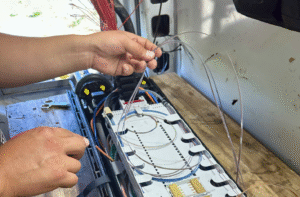
-
New network construction – connecting fiber runs or tying into existing network infrastructure
-
Backbone installations – joining high-count ribbon fiber for long-haul links
-
Customer drops – transitioning from feeder cables to individual premises
-
Restoration & relocation work – repairing cuts or degraded segments in the network
Ribbon vs. Single-Tube Fiber Splicing: What’s the Difference?
Not all fiber cables are created equal. One of the key distinctions in fiber construction is whether you’re working with ribbon fiber or loose tube (single-tube) fiber. Each type requires a different splicing approach—and choosing the right method is essential for both efficiency and performance.
Ribbon Fiber Splicing
Ribbon fiber contains multiple fibers (usually 12 or 24 fibers per) neatly organized in a flat, ribbon-like structure. These fibers can be spliced all at once using mass fusion splicing, which dramatically increases efficiency on high-count jobs.
Ideal for:
-
Backbone or transport networks
-
Long-haul or metro ring builds
-
High-capacity carrier infrastructure
At Trace, we use industry-standard mass fusion splicers for ribbon jobs. These devices allow us to splice high ribbon count fibers faster than traditional loose tube cables – this is essential for cutting over or repairing live (‘hot’) cables with active traffic on them.
Single-Tube (Loose Tube) Splicing
Loose tube fiber—also known as single tube or buffered fiber—features individually buffered fibers inside color-coded tubes. Each fiber must be spliced one at a time, which offers flexibility but takes more time compared to ribbon. Single splices tend to be cleaner (lower dB loss), but take significantly more time for high fiber count cables.
Ideal for:
-
Distribution or access networks
-
Customer drops and premise work
-
Areas with varied fiber counts or frequent service taps
Trace splicers are trained in both ribbon and loose tube techniques.
Where Splicing Fits in the Project Timeline
Splicing typically occurs toward the final stages of construction, once civil work, conduit installation, and cable pulling are complete. At Trace, we integrate splicing as part of our end-to-end project flow, ensuring coordination between the field crews and project managers.
A typical fiber installation project includes:
-
Engineering and permitting
-
Underground construction (trenching, boring, handhole placement)
-
Cable placement
-
Splicing and testing
-
As-builts and project closeout
Once fiber is spliced, it undergoes testing using tools like OTDR (Optical Time Domain Reflectometer) to verify the splice integrity, ensure proper light levels, and identify any potential issues before the network goes live.
✅ At Trace, our splicing crews use Exfo and Fujikura gear and generate customer-ready reports for seamless documentation.
Supporting Denver Restoration & Emergency Repairs
Fiber networks are critical infrastructure—and like any infrastructure, they’re vulnerable to damage from accidental excavation, weather events, or aging components.
When damage occurs, fiber splicers are among the first responders, along with Trace civil crews and project managers.
Here’s how the restoration process works:
-
Locate the fault – Using OTDR equipment, splicers can pinpoint where a fiber break or degradation is occurring, often within a few meters
-
Prep the repair site – Technicians access the affected cable, clean it, and prepare it for re-entry
-
Re-splice fibers – Damaged sections are cut out and replaced, with each fiber re-spliced and tested
-
Document & restore – Splicing data is recorded, and connectivity is verified before the site is restored
For emergency fiber cuts—often requiring night work or rapid deployment—Trace offers after-hours response with a trained splicing team that can quickly restore service to critical systems.
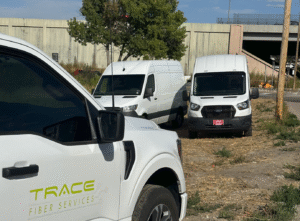
Fiber Splicing You Can Trust in Colorado and Beyond
Our splicing team is trusted by telecom providers, ISPs, municipalities, and infrastructure partners across Colorado and the greater Mountain West. We handle:
-
High-count ribbon and loose-tube splicing
-
OSP (outside plant) network construction
-
Emergency damage restoration
-
Post-splice OTDR and power meter testing
-
Final documentation for customer records and permits
From backbone builds to cut repairs, our splicers ensure your network performs as designed—day one and beyond.
Need a Reliable Splicing Partner in Colorado?
Trace Fiber Services delivers expert fiber splicing across Colorado, backed by trained crews, top-tier equipment, and a field-tested process. Whether you need planned splicing for an infrastructure build or fast-turn restoration after a line strike—we’re here to help.
👉 Contact us today to schedule a splicing crew or request a quote for turn key construction of your next OSP network node.
Trace Fiber Services
Underground Fiber Construction | Splicing | Emergency Restoration
Serving Denver, Boulder, Fort Collins, Colorado Springs, and surrounding regions.