
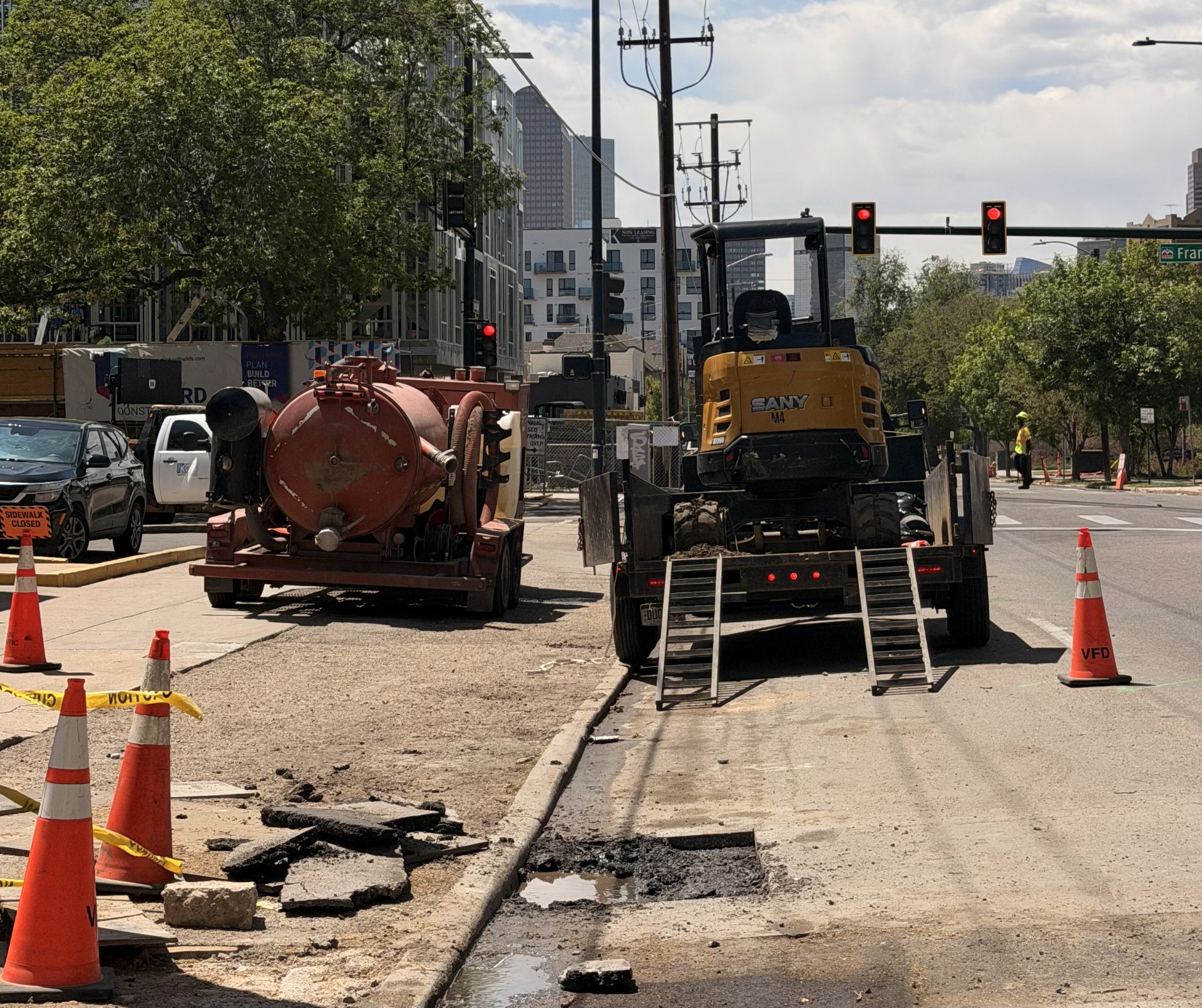
Emergency Fiber Response Is Measured in Minutes — Not Days
In Colorado, a fiber outage rarely happens at a convenient time.
It might be a directional bore strike along a Front Range expansion project. A washed-out handhole after spring runoff in the mountains. Or a utility conflict that cuts service to an entire commercial corridor.
For network owners and maintenance teams, the pressure starts immediately:
- How fast can crews mobilize?
- Who can safely locate and expose the damaged section?
- Can the contractor handle both civil and fiber work?
- How quickly can the network be tested, restored, and documented?
In emergency response work, every handoff adds delay.
That’s why Trace Fiber Services is built around rapid-response deployment with in-house capabilities across civil construction, restoration, splicing, and testing. When critical infrastructure is down, our teams move quickly because the people excavating the damage are coordinated with the people repairing the fiber.
For Colorado network operators, municipalities, carriers, and private infrastructure owners, that difference matters.
Why Emergency Fiber Restoration Gets Delayed
Many emergency restoration projects slow down long before the actual splice work begins. This is often because many contractors can only perform one part of the work on damages.
The issue usually isn’t the repair itself — it’s coordination.
A typical outage response may involve:
- Locating the damaged section
- Dispatching excavation crews
- Waiting for subcontracted traffic control
- Coordinating restoration permits
- Performing physical restoration
- Bringing in separate splice technicians
- Splicing repaired cable
- Rebuilding documentation after service restoration
In Colorado’s construction environment, those delays compound quickly.
Cities along the Front Range often have different permitting requirements, utility coordination processes, and restoration expectations. Mountain corridors add weather exposure and travel constraints. Rural restoration projects can require long mobilization windows, especially if coordinating multiple contractors.
Meanwhile, customers are offline and SLA costs start adding up.
Enterprise clients lose connectivity. Municipal systems experience interruptions. Construction schedules pause. SLA exposure increases by the hour.
Emergency response is not just about technical skill. It’s about deployment efficiency.
How Trace Responds to Fiber Emergencies Faster
Trace Fiber Services approaches emergency restoration differently than contractors that rely heavily on subcontracted labor.
Because our teams self-perform both civil and fiber scopes, we can compress the response timeline and reduce coordination gaps during active outages.
Rapid Mobilization Across Colorado
Our crews regularly support projects throughout:
- Denver metro
- Colorado Springs
- Fort Collins
- Pueblo
- Mountain communities and utility corridors
- Expanding Front Range developments (e.g., Adams County)
When outages occur, existing field coverage and active project presence help reduce mobilization delays.
Instead of assembling multiple vendors after the outage is reported, Trace can coordinate excavation, restoration, splicing, and testing through one operational structure. Even bringing in drill crews if the whole span needs to be re-bored.
In-House Civil + Fiber Teams
Emergency restoration often depends on excavation speed.
If the damaged conduit or cable cannot be safely exposed quickly, fiber crews remain idle while the clock continues running.
Trace integrates:
- Civil crews
- Splicing teams
- Project management
- Traffic control
- Aerial capabilities
- Restoration coordination
- Documentation and closeout
This reduces downtime caused by subcontractor scheduling conflicts and communication delays.
Field Coordination That Supports Real-Time Decisions
Emergency projects rarely unfold exactly as expected.
A simple locate strike can uncover:
- Additional conduit damage
- Water intrusion
- Existing infrastructure issues
- Congested utility conflicts
- Improper legacy installs
- Damaged vaults or handholes
Fast response requires field teams that can adapt without waiting for multiple layers of approval.
Our project managers, field supervisors, and fiber personnel stay aligned throughout the restoration process so decisions can happen in real time.
Colorado Conditions Make Fiber Response More Complicated
Emergency restoration in Colorado comes with challenges that national contractors sometimes underestimate.
Weather and Terrain
Spring snowstorms along I-70. Freeze-thaw ground conditions near the foothills. Heavy runoff in mountain communities. Sudden weather shifts on exposed utility routes.
Colorado projects require crews familiar with working in changing environmental conditions.
Municipal Requirements
Every jurisdiction handles restoration differently.
Denver, Aurora, Colorado Springs, and smaller municipalities may each require different:
- Traffic control expectations
- Restoration standards
- Inspection processes
- Emergency utility coordination procedures
- Lane closure approvals
Local familiarity speeds up response.
Ongoing Front Range Expansion
Colorado’s continued residential and commercial growth means more utility congestion and more active construction environments.
As broadband infrastructure expands into new developments, the risk of accidental utility damage increases.
Emergency response teams need experience operating inside active construction zones while maintaining restoration timelines.
What Network Owners Need During an Outage
During emergency restoration, communication matters almost as much as the repair itself.
Maintenance teams and network owners need clear visibility into:
- Estimated restoration timelines
- Damage severity
- Crew status
- Testing progress
- Splice completion
- Documentation updates
- Site restoration
One of the biggest frustrations operators face during outages is fragmented communication between subcontractors.
If the excavation company, splice team, and testing technicians all operate independently, updates become inconsistent and delays become difficult to track.
Trace emphasizes centralized project communication so customers have a clearer understanding of restoration progress from dispatch through closeout.
Restoration Quality Still Matters Under Pressure
Fast restoration should never mean rushed workmanship.
Temporary fixes that fail weeks later create larger operational problems and additional maintenance costs.
Emergency repairs still require:
- Proper splice protection
- Accurate testing
- Clean documentation
- Safe excavation practices
- Restoration compliance
- Long-term network reliability
Trace crews prioritize restoration quality even during accelerated deployment scenarios.
Our goal is not simply to get services temporarily online. It’s to restore infrastructure correctly while minimizing operational disruption.
Why Self-Performing Contractors Respond More Effectively
Colorado network owners increasingly prefer contractors that self-perform critical scopes because accountability improves during high-pressure situations.
With self-performing teams:
- Scheduling becomes more predictable
- Communication improves
- Field coordination accelerates
- Escalation paths are shorter
- Restoration timelines tighten
- Documentation consistency improves
For emergency response work, that operational control becomes a major advantage.
When outages happen, there is no time to manage multiple disconnected vendors.
Emergency Fiber Response Is About Preparedness
The best emergency restoration teams do not simply react quickly.
They prepare operationally before outages happen.
That includes:
- Maintaining trained crews
- Coordinating equipment availability
- Standardizing restoration workflows
- Managing documentation processes
- Supporting active field communication
- Building regional familiarity across Colorado markets
At Trace Fiber Services, emergency response is supported by the same operational structure we use on long-term network construction projects.
That consistency helps reduce confusion when response timelines become critical.
Partner With a Colorado Fiber Contractor Built for Rapid Response
Fiber outages impact customers, schedules, revenue, and operational credibility.
When restoration timelines matter, network owners need contractors that can mobilize quickly, coordinate efficiently, and execute both civil and fiber scopes without unnecessary delays.
Trace Fiber Services supports emergency fiber restoration throughout Colorado with in-house crews, coordinated project management, and field-tested deployment experience.
Whether the issue involves damaged conduit, emergency splicing, restoration excavation, or rapid-response troubleshooting, our teams are built to respond quickly while maintaining quality and accountability.
If your organization needs a responsive fiber construction and restoration partner in Colorado, contact the Trace team today. Establishing contractor relationships up front speeds up response time when it counts.