
If you manage fiber infrastructure across the Colorado Front Range or Wyoming, you already know: field conditions can be extreme, access can be tough, and network uptime is everything.
Whether you’re supporting dense fiber corridors in Denver or remote long-haul lines through Cheyenne or Fort Collins, one thing remains constant — when outside plant (OSP) fiber is damaged, delays are costly.
For project managers and NOC teams at companies like Verizon, Zayo, AT&T, or regional ISPs, responding quickly to an outage isn’t just a goal — it’s a contractual obligation with real SLA penalties. And when that response involves multiple contractors handing work off between disciplines, things break down.
This is where working with a single, integrated telecom contractor, one with in-house crews and assets covering both fiber and civil scopes, delivers real advantage. And ideally, you just have one number to get ahold of an on-duty Project Manager.
In-House Fiber, Civil, and Restoration Crews = Faster, Smarter Response
In the Front Range and across Wyoming, weather, terrain, and access are often unpredictable. Add in seasonal construction restrictions, permit windows, and tight service level agreements (SLAs), and the margin for inefficiency disappears.
A common multi-vendor damage response looks like this:
-
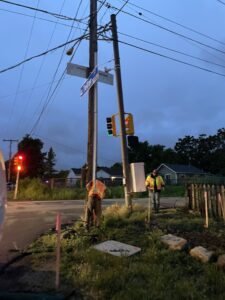
Splicing contractor rolls out, diagnoses the issue, and discovers a conduit or infrastructure failure.
-
Civil contractor is scheduled separately to excavate, make duct repairs, and pull in new fiber — often hours (or even days) later.
- An aerial vendor may get called if there is an aerial component to the network damage
-
Once civil is done, the splicing team returns to complete fiber restoration.
- Traffic control assets are pulled into the mix somewhere along the restoration process
Now you’re two or three mobilizations deep — with idle time stacking up, crew rates compounding, and no one team owning the end result.
Contrast that with a partner who arrives fully equipped to do it all: locate, excavate, repair, and splice. That’s how Trace operates. Our civil and splicing teams coordinate as one unit. We don’t wait on subcontractors to “catch up,” and our field leadership can adjust on the fly — especially critical when you’re restoring fiber on I-25 at 2 AM or in rural Weld County during a snowstorm.
Downtime in the Rockies Isn’t Just Expensive — It’s Disruptive
The cost of OSP downtime in this region goes beyond splicer rates or equipment rentals.
-
Crew Idle Time: You’re paying premium labor rates for splicers to sit while the civil crew mobilizes or finishes.
-
SLA Exposure: Carriers with enterprise customers in Boulder or Cheyenne can’t afford extended outages — those penalties add up fast.
-
Reputation Impact: Outages affect not just your customer, but your customer’s customer. That ripple effect hits harder in smaller metro areas where competition is local and retention is everything.
-
Access Delays: Traffic control in Denver Metro? Called out splicers but need a bucket truck? These aren’t hypotheticals — they’re weekly realities.
With Trace, the same team that diagnoses a dig-up on Tuesday night can have it repaired and tested by Wednesday morning. We build fiber and we fix it — which means fewer trucks, less finger-pointing, and faster restoration. And if the situation is so bad that the span needs to be rebored with an HDD, we can do that in-house too.
One Point of Contact for NOC and PM Teams
When a contractor damages your network at 4:37 PM on a Friday afternoon, your NOC doesn’t have time to coordinate between multiple contractors. They need clear status, fast escalation, and one accountable contact who can own the entire response.
We provide that. Our project managers and field supervisors speak the language of fiber — and civil, permitting, traffic control, and inspection. From the first call to the final splice test, your team deals with one vendor, not three.
That single point of coordination becomes even more valuable when managing networks that span urban, suburban, and rural geographies — which is the case for most providers operating in this region.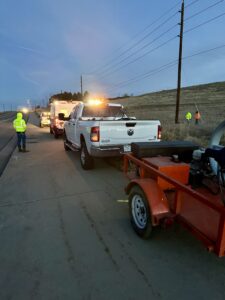
A Regional Partner That Knows the Ground You Build On
Not all contractors are built for Colorado and Wyoming. Trace Fiber Services is. We’re based in Denver, and we’ve been building and servicing OSP fiber throughout the Front Range and Mountain West for years.
We understand:
-
Local permitting and traffic control processes — from CDOT to county jurisdictions.
-
High-elevation and winter work readiness — our crews are equipped for it.
-
Regional utility and broadband priorities — we support carrier, public, and municipal clients across the state.
Final Word: Make the First Call the Only One You Need
When you’re dealing with a fiber cut, the worst-case scenario is needing to explain to leadership why the job stalled waiting on a second crew to show up.
Partnering with a single, full-scope telecom contractor eliminates that risk. It reduces downtime, simplifies operations, and — most importantly — gets your customers back online faster.
If your network runs through Colorado or Wyoming, you can’t afford delays. Choose a partner who’s ready to respond — with the right locally-based crews, right now.
Reach out to our team to get a relationship setup before you run into problems.