
Published: June 2026
As demand for cloud computing, AI workloads, content delivery, and enterprise connectivity continues to grow, data centers across the Mountain West—including Colorado, Wyoming, New Mexico, and Arizona—are expanding their network capacity at an unprecedented pace. Yet while discussions often focus on tax / environmental issues, servers, power systems, and cooling infrastructure, one critical component is frequently overlooked:
The Outside Plant (OSP) fiber network.
The reality is simple: a world-class data center is only as reliable as the fiber infrastructure connecting it to the outside world. Whether serving hyperscale operators, AI computing platforms, enterprise tenants, wireless carriers, or regional network providers, data centers depend on robust OSP fiber networks to move traffic into and out of their facilities. This trend is accelerating as AI data centers need increasing data transport to produce increasingly complex results.
With >$130B of data centers in construction as of this writing, the opportunity and need to serve their OSP requirements is unprecedented. For network operators, understanding the relationship between OSP construction and data center performance is essential to maintaining uptime, supporting future growth, and minimizing operational risk.
What Is an OSP Fiber Network?
Outside Plant (OSP) fiber infrastructure includes all fiber optic facilities located outside a building. This includes:
- Long-haul fiber routes
- Metro fiber networks
- Underground conduit systems
- Handholes and vaults
- Directional bore pathways
- Aerial fiber infrastructure
- Fiber splice enclosures
- Entrance facilities connecting networks into buildings
The OSP network serves as the physical transportation layer that connects data centers to carriers, customers, cloud providers, and critical communications infrastructure.
While the data center houses the equipment that processes and stores data, the OSP network provides the pathways that allow information to reach its destination.
Different Types of Data Centers Have Different Fiber Requirements
Not all data centers are built for the same purpose, and OSP infrastructure requirements can vary significantly depending on the facility type.
Hyperscale Data Centers
Hyperscale facilities operated by major cloud providers require massive fiber density, diverse carrier access, and scalable conduit systems capable of supporting continuous growth. These facilities generally have diverse, high count fiber cables feeding them from at least two directions.
AI Data Centers
AI-focused facilities generate enormous east-west and north-south traffic demands, requiring high-capacity fiber connectivity, low-latency routes, and significant room for future expansion as compute clusters grow. AI data centers are also using significant amounts of fiber INSIDE the building to connect GPU workloads. Some reports estimate the AI data centers are using up to 35x the amount of fiber from traditional data centers.
Colocation Data Centers (aka Colo’s)
Colocation providers depend on carrier diversity and flexible connectivity options to support multiple tenants with varying network requirements. COLOs with large amounts of interchange (not just dedicated racks) tend to have higher OSP connections.
Edge Data Centers
Edge facilities prioritize low-latency connectivity and often require strategic placement near population centers, transportation corridors, or wireless infrastructure. The OSP connectivity requirements for these data centers are generally much lower than hyperscale or AI data centers. This lower OSP requirement is generally due to local processing and lower criticality to the overall network.
Enterprise and Government Data Centers
Enterprise and public-sector facilities frequently emphasize resiliency, security, and geographically diverse network paths to support mission-critical operations.
Regardless of facility type, reliable OSP infrastructure remains the foundation that enables connectivity, redundancy, and long-term scalability.
Why OSP Infrastructure Matters to Data Center Operators
When discussing reliability, many operators focus on internal redundancy. However, network resilience begins before traffic ever enters the facility.
A poorly designed or poorly maintained OSP network can create risks that include:
- Single points of failure
- Limited carrier diversity
- Extended outage durations
- Capacity constraints
- Delayed customer activations
- Increased maintenance costs
For facilities supporting mission-critical workloads, these risks can directly impact customer satisfaction and service-level agreements.
The strongest data center operators view OSP infrastructure as a strategic asset rather than simply a construction requirement.
Carrier Diversity Starts Underground
One of the most important considerations for any data center is carrier diversity (aka not just multiple lines from the same dark fiber operator).
True redundancy requires more than multiple service providers. If several carriers enter a facility through the same conduit system or follow the same route, a single utility strike or construction incident can disrupt all connections simultaneously.
Operators throughout the Mountain West increasingly prioritize:
- Diverse entrance facilities
- Separate conduit systems
- Independent fiber pathways
- Multiple splice points
- Geographically separated routes
This approach reduces the likelihood that a single fiber cut can impact multiple circuits.
For facilities supporting enterprise customers, healthcare systems, financial institutions, government agencies, or public-sector networks, route diversity is often a requirement rather than a luxury.
The Mountain West Presents Unique OSP Challenges
Building fiber infrastructure for data centers across Colorado, Wyoming, New Mexico, and Arizona presents challenges not found in many other regions.
Network construction teams must navigate:
Rapid Growth and Development
Markets such as Denver, Colorado Springs, Phoenix, Mesa, Albuquerque, and surrounding communities continue to experience significant commercial and industrial growth. Existing utility corridors are increasingly congested, requiring careful planning and utility coordination.
Long-Distance Connectivity Requirements
Many Mountain West data centers rely on regional and long-haul fiber routes spanning large geographic areas. Designing resilient pathways often requires coordination across multiple jurisdictions and utility providers.
Mountain, Desert, and Rocky Terrain
From the Rocky Mountains of Colorado and Wyoming to the desert environments of Arizona and New Mexico, construction teams encounter varying soil conditions, rock formations, elevation changes, and environmental considerations that can impact deployment methods and project timelines.
Extreme Weather Conditions
Heavy snow, freeze-thaw cycles, high winds, monsoon activity, and extreme heat can all affect construction schedules and long-term infrastructure performance.
Critical Infrastructure Coordination
Many fiber routes intersect utility systems, transportation assets, tribal lands, federal lands, and municipal infrastructure that require specialized construction methods and permitting processes.
Successful projects require contractors with extensive regional knowledge and experience navigating the regulatory and construction environments throughout the Mountain West.
Data Center Growth Is Increasing Demand for Fiber Capacity
The rise of AI computing, cloud services, edge computing, and content distribution continues to increase bandwidth requirements.
For network operators, this means:
- More fiber counts per route
- Expanded conduit capacity
- Additional entrance facilities
- Greater route diversity requirements
- Faster deployment schedules
Many operators are now planning infrastructure with future expansion in mind rather than simply meeting current demand.
Installing additional conduit and pathway capacity during initial construction is often significantly less expensive than retrofitting capacity later.
The Importance of Quality Fiber Construction
A fiber route is expected to remain in service for decades. One data point is that NTIA generally suggests that an outside plant network should be depreciated on a 20-year timeline.
Construction quality directly impacts long-term network performance and maintenance requirements.
Key considerations include:
Network construction.
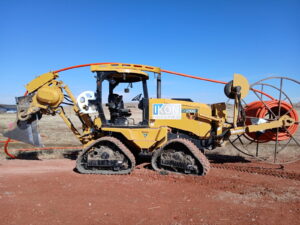
As the modern landscape of data centers evolves, new builds are often far away from existing long haul routes. This can require a combination of plowing and boring crews to build out new network infrastructure. As the new line gets closer to the data center’s physical footprint, this generally transitions to all boring or a joint trench for the final connection to the building.
Accurate Documentation
As-built documentation simplifies future maintenance, troubleshooting, and network expansion.
Quality Fiber Splicing
Low-loss splicing improves optical performance and reduces troubleshooting challenges throughout the network lifecycle.
Thorough Testing
OTDR testing and power validation help identify issues before network activation.
When construction quality is prioritized from the beginning, operators experience fewer outages and lower long-term operational costs.
OSP Maintenance Is Just as Important as Construction
Even well-built networks require ongoing maintenance and emergency response capabilities.
Common threats include:
- Third-party excavation damage
- Utility strikes
- Roadway construction impacts
- Environmental degradation
- Aging infrastructure
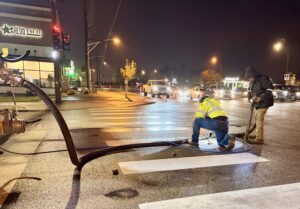
Rapid response becomes especially important for facilities supporting enterprise and carrier customers where downtime can have significant financial consequences.
Maintaining relationships with contractors who understand the network and can mobilize quickly often reduces outage durations and restoration costs.
Building Reliable Data Center Connectivity
As digital infrastructure continues to expand across Colorado, Wyoming, New Mexico, and Arizona, OSP fiber networks will remain the foundation supporting data center operations.
The facilities generating, processing, and storing information may be highly visible, but the underground and aerial fiber infrastructure connecting those facilities ultimately determines network reach, resiliency, and scalability.
For data center operators planning expansions, new carrier connections, or network upgrades, investing in quality OSP infrastructure today helps ensure reliable performance for years to come.
Partner with Trace Fiber Services
Trace Fiber Services provides turnkey OSP construction, directional drilling, fiber installation, splicing, permitting, and emergency restoration services throughout Colorado and the Mountain West. Whether you’re expanding connectivity to an existing data center or building new network infrastructure, our team delivers end-to-end solutions that keep projects moving.
Contact Trace Fiber Services today: https://trace-fs.com/contact/