
Colorado’s digital growth isn’t happening by accident—it’s being built, mile by mile, through strategic telecom construction.
From the Denver metro area to rural communities on the Western Slope, Colorado telecom construction is driving the expansion of fiber optic networks, enabling faster internet, supporting 5G, and closing the digital divide.
At Trace Fiber Services, we specialize in fiber optic and OSP construction in Colorado, helping providers and municipalities deploy reliable infrastructure built for long-term performance in some of the country’s most challenging terrain.
Why Colorado Telecom Construction Is Accelerating
Demand for high-speed connectivity across Colorado has never been higher. Population growth along the Front Range—especially in Denver, Aurora, Colorado Springs, and Fort Collins—is pushing networks to expand rapidly.
At the same time, state and federal funding initiatives are fueling broadband expansion into underserved rural areas.
This surge in demand is driving growth in:
-
Fiber optic construction in Colorado for gigabit-speed networks
-
OSP (outside plant) construction to support long-haul and last-mile connectivity
-
Telecom infrastructure upgrades replacing legacy copper systems
-
5G small cell deployment across urban corridors
- Last mile deployments to neighborhoods
Without experienced telecom contractors, these projects can’t move forward efficiently—or successfully.
What Is OSP Construction in Telecom?
OSP (Outside Plant) construction refers to all physical telecom infrastructure installed outside of buildings—everything from underground conduit to aerial fiber lines.
In Colorado telecom construction projects, OSP includes:
-
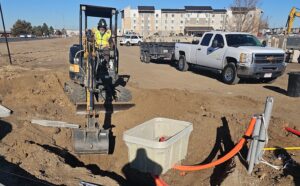
Underground trenching and directional boring
-
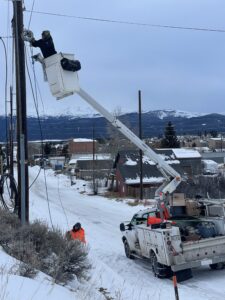
Aerial fiber installation on utility poles
-
Conduit placement and vault installation
-
Fiber pulling, splicing, and testing
-
Network maintenance and repair
Because Colorado’s terrain varies from dense urban environments to mountainous regions, OSP construction requires both technical expertise and local experience.
The Challenges of Fiber Optic Construction in Colorado
Building fiber networks in Colorado isn’t straightforward. Successful execution depends on understanding the region’s unique conditions.
Mountainous Terrain & Rocky Soil
From the foothills west of Denver to high-elevation passes along the I-70 corridor, crews must adapt construction methods to difficult ground conditions.
Weather & Seasonal Constraints
Snow, freeze-thaw cycles, and sudden weather shifts can impact timelines—especially in northern Colorado and mountain communities.
Permitting Across Municipalities
Each city—whether it’s Denver, Colorado Springs, or a smaller town like Grand Junction—has different permitting processes that must be navigated efficiently.
Rural Broadband Expansion
Long-distance fiber builds across the Eastern Plains and Western Slope require precise planning to remain cost-effective.
Fiber Optics: The Backbone of Colorado’s Broadband Infrastructure
Fiber optic technology is the foundation of modern telecom networks—and it’s rapidly replacing outdated systems across the state.
Compared to copper, fiber offers:
-
Gigabit and multi-gigabit speeds
-
Low latency for business and cloud applications
-
Greater durability in Colorado’s climate
-
Long-term scalability for future demand
This is why fiber optic construction in Colorado is a top priority for ISPs, municipalities, and private developers.
Choosing the Right Telecom Construction Company in Colorado
Not all contractors are equipped to handle the complexity of telecom infrastructure projects in Colorado.
When evaluating telecom construction companies in Colorado, look for:
Local Experience
A contractor familiar with the Front Range, mountain regions, and rural buildouts can anticipate challenges before they become delays. They also have relationships with municipalities and specialty subcontractors.
Full-Service Capabilities
From OSP construction to fiber splicing and testing, working with one partner reduces coordination issues and improves timelines.
Safety & Compliance
Telecom construction involves heavy equipment, utility coordination, and strict safety standards—experience matters.
Scalable Network Design
Your infrastructure should support future expansion, not just current demand.
Trace Fiber Services delivers end-to-end fiber optic and OSP construction services, built specifically for Colorado’s environment and regulatory landscape.
Best Practices for Successful OSP & Fiber Projects
Top-performing telecom construction projects share a few key characteristics:
-
Detailed route planning to avoid conflicts and delays, as well as working with engineering partners to deconflict issues as they come up
-
Efficient permitting coordination across municipalities and CDOT
-
High-quality installation standards for long-term network reliability
-
In-hour splicing and testing to speed the project to completion
-
Minimal disruption to communities and existing infrastructure through precision directional boring
Execution—not just planning—is what separates successful builds from costly setbacks.
The Future of Telecom Construction in Colorado
Colorado is entering a new phase of connectivity expansion.
With continued investment from federal broadband programs and increasing demand from businesses and residents, telecom construction will continue to accelerate across:
-
The Denver metro area and Front Range
-
Rural communities across the Western Slope
-
Expanding suburban corridors
-
Industrial and commercial developments
Companies that invest in high-quality fiber and OSP infrastructure today will define Colorado’s digital landscape for decades.
Let’s Build Colorado’s Fiber Network Together
Telecom construction is more than infrastructure—it’s the foundation of Colorado’s future.
Whether you’re planning a fiber optic construction project, expanding broadband access, or need a trusted OSP construction partner in Colorado, Trace Fiber Services delivers the expertise to get it done right.
👉 Start your project today: https://trace-fs.com/contact/
Frequently Asked Questions About Colorado Telecom Construction
What does a telecom construction company do?
Telecom construction companies design, build, and maintain infrastructure such as fiber optic networks, conduit systems, and aerial cable installations.
What is OSP construction in telecom?
OSP (Outside Plant) construction includes all external telecom infrastructure—underground and aerial—that connects networks over long distances.
How long does fiber optic construction take in Colorado?
Timelines vary depending on terrain, permitting, and project size. Urban builds may take weeks, while rural expansions can take several months.
Why is fiber optic construction important in Colorado?
Fiber enables high-speed internet, supports economic growth, and expands connectivity to underserved communities across the state.
How do I choose a telecom contractor in Colorado?
Look for local experience, full-service capabilities, proven safety practices, and a track record of successful OSP and fiber deployments.