
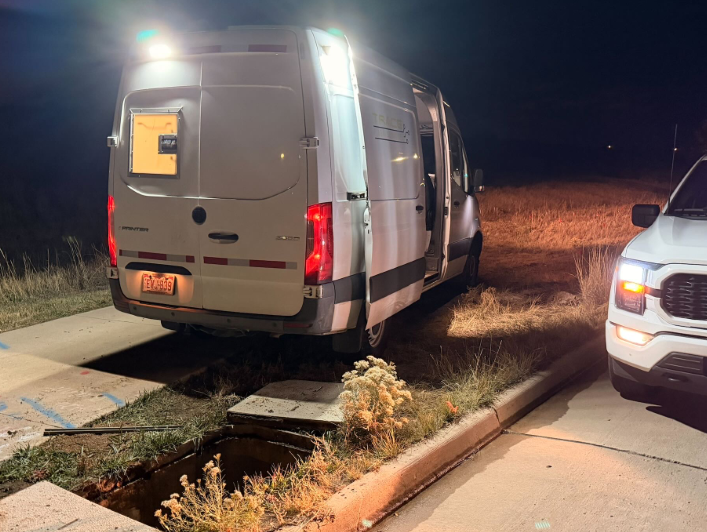
A civil crew widening a Denver road may see a new fiber cable get installed weeks before the old one can come out. There’s a reason for the gap. The telecom contractor can build the new route in daylight while the old cable carries customer traffic. Moving customers onto the new fibers is the part the network operator may schedule for midnight or 2AM.
That transfer is a fiber cutover. The carrier typically chooses an overnight maintenance window because fewer customers are using the affected circuits and a brief interruption is likely to disrupt fewer operations. This allows the carrier’s NOC (Network Operations Center) to coordinate and re-route customer traffic. The right hour depends on who uses the fiber. Two in the morning might work for an office park, but it could land in the middle of a production shift for a Colorado mine or a scheduled backup for a data center.
The scheduled maintenance window also gives customers advance notice and puts the right people on duty together. A civil crew can hustle slack, the splice crew can be at the enclosures, and the carrier’s network operations center (NOC) can monitor the affected circuits. A planned six-hour window on a notice means the operator has reserved six hours for the work, testing and recovery (at least for the live / hot fibers). An individual circuit may be interrupted for only a portion of that time. Where a verified alternate path can carry the traffic, customers may see no interruption at all.
Four situations that call for a scheduled fiber cutover
There are a variety of situations where a contractor and carrier will schedule a fiber cutover.
Network relocation. A road widening, bridge replacement or utility project can put an existing fiber line in conflict with an upcoming change to the right-of-way. Along the Front Range, that might mean building a new conduit run and pulling cable between two handholes before the road contractor reaches the old alignment. Trace can handle the HDD boring, cable placement and case preparation while the existing route stays in service. Once the operator releases the work, our splicers transfer the assigned fibers. The old route can be retired/abandoned after the operator accepts the new one.
Network upgrade. A carrier running short on spare fibers may pull a higher-count cable into an existing corridor (called overpulling). Installing a higher count cable creates capacity (e.g., moving from a legacy 96F to an 864MF). Moving working circuits onto it is what creates customer exposure. A carrier can stage those moves across several windows, transferring one group of circuits and verifying service before releasing the next. That matters when a single cable serves several customers with different operating hours.
Repairs on live circuits. Sometimes the circuit is still up, but testing points to excessive loss at a splice. Opening the enclosure and remaking that splice can interrupt a customer who still has service. If the condition is stable, the operator can arrange a window with that customer. Trace can review the strand assignment, prepare the repair and compare the optical readings before and after the work. The NOC then checks that the affected service is back and performing as expected.
Emergency fiber damage. When an excavator severs a cable at noon and customers lose service, restoration starts at immediately. A cutover may still take place later that night or days later. For example, if a temporary cable gets customers back online while crews rebuild the damaged conduit, the operator can schedule the transfer from the temporary cable to the permanent repair. Those are two separate decisions. The outage drives the first response. Customer impact guides the timing of the permanent move.
What Trace does before the window opens
One of the most valuable questions a splicer can ask in daylight is, “Does the assignment on this sheet match what’s in the enclosure?” Finding a discrepancy while the original route is carrying traffic gives the Project Manager time to resolve it with the telecom carrier. Finding it after the first cut spends minutes the customer may already be offline.
For a planned cutover, Trace’s Project Manager and field teams can walk the splice locations, confirm access, coordinate traffic control where the work occupies a roadway, and stage cable, closures and test equipment. With the operator, we review which fibers move, in what order, who authorizes the first cut and what to do if a circuit fails its checks. Once the original strand has been cut, restoring the previous path may require another splice. That time belongs in the plan.
During the window, Trace handles the assigned field work and optical testing while the NOC watches the services riding those fibers. A clean optical test tells our splicer the repaired path meets the agreed criteria. Confirmation from the NOC tells the team the customer’s circuit is carrying traffic again. Updated splice records and test results give the next crew a reliable starting point.
That combination of project management, splicing and testing also matters when the scope is unknown. At a remote Colorado gold mine, Trace sent a project manager to assess a fiber outage before dispatching the splicing personnel and equipment the site needed. On a planned cutover, we can do that assessment ahead of the maintenance window and reserve the overnight hours for the work that affects service.
Planning a fiber relocation, capacity upgrade or permanent repair in Colorado? Bring us the route, the circuits involved and the maintenance window your customers can support. Contact Trace Fiber Services to coordinate the civil work, splicing and testing around that window.