
When a fiber network goes down, the last thing a carrier needs is a long list of phone numbers.
A typical OSP damage can require several different resources. A project manager needs to coordinate the response. A civil crew may need to expose damaged infrastructure. Fiber splicers need to repair and test the cable. And when conduit or a bore has been destroyed, a drill crew may be required before the fiber can be restored.
At Trace Fiber Services, one emergency phone number can start that entire response.
But there’s an important first step: get set up before the outage happens.
Emergency Response Starts Before the Emergency
The middle of a fiber outage isn’t the ideal time to negotiate terms, complete vendor onboarding or determine who has authority to dispatch crews.
That’s why Trace’s one-call emergency number is provided to carriers and other partners who have been onboarded with a Master Service Agreement (MSA) in place.
Completing that process ahead of time means both teams know how to work together before an emergency occurs. When an outage happens, the carrier has a known point of contact and Trace has the framework in place to begin coordinating the appropriate response.
Preparation turns the question from “Who can we call?” into “Call Trace.”
One Number. Multiple OSP Capabilities.
Once onboarded, carriers and other OSP network operators have a single emergency contact for accessing Trace’s Colorado-based team. Depending on what crews find in the field, we can coordinate resources including:
- Project managers
- Fiber splicers
- Aerial crews
- Civil crews and equipment (including excavation, cable pulling, and conduit repair)
- HDD directional drilling crews, when necessary
- Traffic control resources
That flexibility matters because the full scope of an outage isn’t always obvious from the initial report.
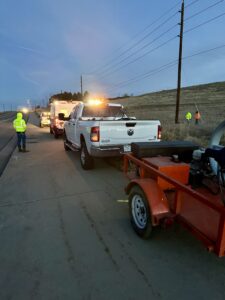
What looks like a straightforward fiber cut may require excavation. Once the damage is exposed, crews may discover crushed or severed conduit. A serious utility strike may even require a replacement bore before new fiber can be installed, spliced and tested.
With separate vendors, each discovery can create another phone call and another handoff.
With Trace, one call can put the necessary resources into motion.
Build the Relationship Before You Need the Response
Carrier NOCs and network maintenance teams already have enough to manage during an outage: identifying affected circuits, communicating internally, tracking restoration and keeping customers informed.
Finding contractors shouldn’t be added to that list.
Having an MSA established with Trace gives your team a response option before the emergency occurs. Your operations personnel can know exactly who to contact, while Trace can coordinate the combination of project management, splicing, civil construction and directional drilling the situation requires.
For carriers operating networks across Colorado and the Mountain West, that preparation can eliminate unnecessary scrambling when minutes matter.
Don’t Wait for a Fiber Cut to Make the Introduction
You can’t schedule an OSP damage, but you can prepare for one.
If Trace isn’t already part of your emergency response plan, now is the time to start the onboarding process. Establish the MSA, make sure your operations team knows the response procedure, and get the Trace emergency contact into the hands of the people who will need it.
Then, when the unexpected happens, one call is all it takes to get the response moving.
Contact Trace Fiber Services to discuss an MSA and adding Trace to your emergency fiber response plan.