
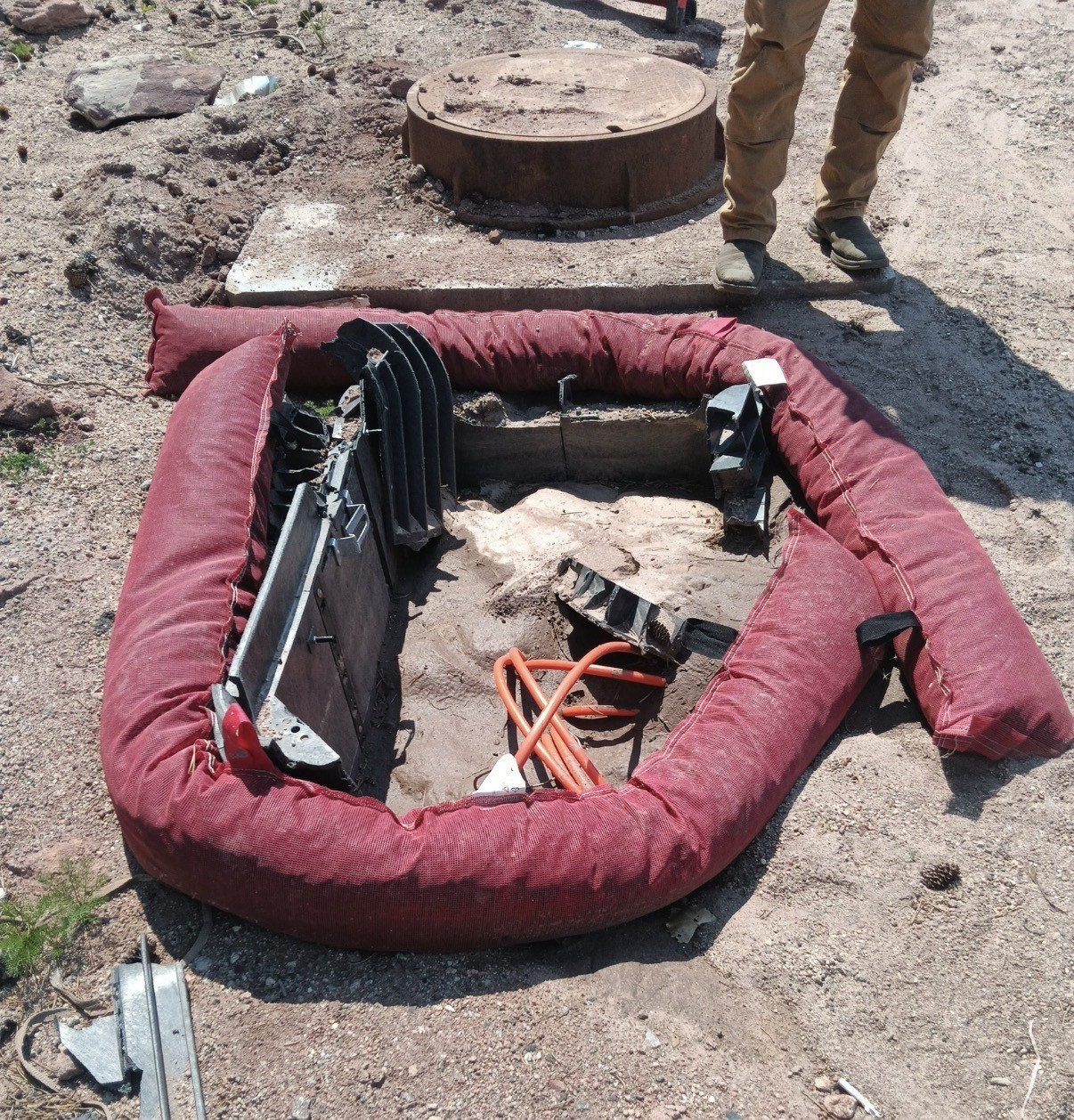
A handhole that needs attention in October can become a much harder job when it is buried under Rocky Mountain snow in January.
For Colorado telecom network operators, fall is an opportunity to work through known outside plant (OSP) maintenance issues before winter makes access and repairs more difficult (and expensive). That includes the infrastructure surrounding the fiber: handholes, vaults, conduit, lids, and the locations crews need to reach when something goes wrong.
Along the Front Range and into the I-70 mountain corridor, a useful winter-readiness plan starts with a practical question: which locations would we least want to repair during a storm?
At Trace Fiber Services, we help network operators turn those concerns into field work. Identifying a problem is the first step. Completing the repair before conditions deteriorate is what makes the preparation worthwhile.
Start with the Locations Your Team Already Knows About
Most network maintenance teams already have a list of sites that deserve another look. A technician may have reported a damaged lid, a difficult-to-locate tracer wire, or a handhole that needs civil repairs. Those items can remain open while more urgent work takes priority.
In the Rocky Mountains, a pre-winter review gives that backlog a deadline.
Start with previous trouble tickets, field photographs, inspection notes, and recurring access complaints. Then compare those records with the importance of the route and the difficulty of reaching each site in winter. A manageable repair near a Denver service yard and the same repair on a mountain corridor may require very different planning.
The goal is a prioritized work list with a defined scope, an owner, and a completion date for each location.
Inspect the Structures That Protect and Provide Access to the Fiber
Handhole and vault maintenance deserves attention even when the network is carrying traffic normally. A working circuit does not tell an operator whether a lid is damaged, an enclosure has shifted, or the next crew will be able to find and access the structure.
A field review should consider:
- Lids and frames: visible damage, fit, and the condition of the surrounding surface.
- Structure condition: settlement, exposed edges, damaged walls, or other issues requiring civil evaluation.
- Water and sediment: recurring accumulation and evidence of conditions that warrant further investigation.
- Cable and closure organization: visible strain, unsupported components, and slack storage that needs review against the operator’s standards and the applicable manufacturer’s instructions.
- Identification and access: accurate asset IDs, location records, photographs, and a workable approach for crews and equipment.
Not every observation calls for replacement. The operator and contractor should agree on what requires repair, what needs additional investigation, and what should be monitored.
Evaluate Water and Freezing Risks at the Specific Location
Winter preparation requires more than assuming outdoor-rated cable will tolerate every condition around it.
Corning’s engineering note, Ice in Conduit, explains that water freezing inside conduit can place pressure on fiber cable, potentially degrading performance or causing damage. It specifically identifies conduit exposed to freezing conditions, including bridge installations, as a concern.
For a maintenance team, that makes recurring water issues and exposed conduit sections worth investigating before cold weather. The appropriate response depends on the installed system, site conditions, and network owner’s engineering requirements. A temporary removal of water should not automatically be treated as a permanent correction.
Document what crews find and develop a location-specific repair scope. Avoid applying the same treatment to every handhole or assuming all underground structures are intended to remain dry.
Project Vignette: Getting Ahead of Winter Along I-70
Trace recently worked with a major network operator to identify handholes along Colorado’s I-70 mountain corridor that needed maintenance. As most travelers along that highway can understand, the right-of-way is tight and will get worse with snow cover.
During other network operations (e.g., cutover on a ULH route), the Trace team noted that a number of customer handholes were in bad shape. Trace project managers drove the route and inspected all handholes along the ULH route to identify which ones needed repair/replacement. The Trace project management team produced a report for the carrier with pictures and locations of handholes. Many of the identified locations were at risk of further damage from snow plows during the upcoming winter period.
Once the carrier maintenance team reviewed the report, they approved a purchase order to repair and replace the handholes prior to the onset of winter.
From that point, Trace applied for and received CDOT ROW work permits and then deployed crews to perform the repairs. All of this work was done without interrupting the live circuits on the ULH lines running through the handholes.
The project illustrates the value of connecting inspection with execution. For a network owner, a list of deficient structures becomes useful when there is a path to getting the work completed.
Turn Inspection Findings into Completed Repairs
A winter-readiness inspection should lead to a work package that a crew can execute.
For each priority location, capture the asset ID, location, observed condition, photographs, proposed scope, materials, and access needs. Identify whether the work requires civil construction, fiber technicians, or coordination between the two. Where the scope affects live facilities, agree on the operator’s work authorization and network coordination requirements before mobilization.
Group nearby repairs where practical. Along a mountain route, organizing materials, equipment, and field visits around a defined set of locations can make the program easier to manage.
Closeout matters as much as the original inspection. Record what was repaired, what remains open, and whether the asset information needs updating. Before-and-after photographs give the maintenance team a useful record without requiring another trip just to understand what changed.
Trace’s OSP construction and repair capabilities allow network owners to coordinate civil work, fiber work, and project management through one partner. That continuity is especially useful when an inspection identifies a repair that involves more than the enclosure itself.
Make Sure the Winter Response Plan Is Ready, Too
Preventive maintenance reduces known risks, but operators still need a plan for unexpected damage.
Before winter, confirm that the people handling a network incident have current route records, contractor contacts, access information, and authority to initiate the response. Check that those details are available to the personnel covering nights and weekends as well as the weekday maintenance team.
Trace’s emergency-response onboarding process includes establishing a Master Service Agreement before providing the one-call emergency contact. Completing that work ahead of an incident gives both teams a defined starting point when support is needed.
For winter planning, the maintenance list and response plan should inform one another. Any repair that remains open should be visible to the team that may have to respond to it later.
Put Colorado Fiber Maintenance on the Schedule Before Winter
For network owners across Denver, the Front Range, and Colorado’s mountain corridors, the next step can be simple: review the known problem locations, prioritize the repairs, and assign the work.
Trace Fiber Services can help move that effort from inspection findings to completed field maintenance, with construction and fiber capabilities available as the scope requires.
Have handholes, vaults, or other OSP infrastructure that needs attention before winter? Contact Trace Fiber Services to discuss your maintenance backlog, repair scope, and emergency readiness.