
For telecom network operators building out the next phase of fiber infrastructure — speed, control, and continuity are everything. Every day lost to permitting delays, subcontractor bottlenecks, or splicing backlogs pushes revenue out, raises costs, and creates friction with local stakeholders.
At Trace, we offer a full-service delivery model that’s been purpose-built for the Colorado market. From engineering to HDD, civil construction, aerial, traffic control, and fiber splicing — we handle it all under one roof. The result: fewer delays, fewer change orders, and faster network turn-up.
If you’re currently sourcing design, construction, and splicing from separate vendors (or managing a national GC who subcontracts everything) here’s why a full-service, Front Range regional partner will outperform on every key metric.
Speed-to-Revenue: One Team, One Schedule
In fiber deployment, time is money. A 45-day construction delay doesn’t just stretch your Gantt chart, it pushes back your service activation, customer acquisition, and revenue capture.
When you work with a contractor who owns all phases (design, permitting, boring, final construction, and splicing), you eliminate the lag between scopes. You also gain a single source of accountability to manage:
-
Permit submittals aligned to construction readiness
-
Locates and potholing coordinated before bore crews mobilize
-
Fiber delivery scheduled to splice windows, not missed handoffs
- Project Managers that are responsible from beginning-to-end
By eliminating gaps between disciplines, our integrated teams routinely compress deployment timelines by 10–25% compared to projects run through multiple subcontractors.
That’s weeks — or even months — of accelerated revenue for your network.
Fewer Change Orders. More Predictability.
When different vendors are responsible for design, construction, and splicing, scope gaps are inevitable. You end up paying for:
-
Redline revisions after field crews discover design conflicts
-
Extra mobilizations for splicers who show up to unready handholes
-
Traffic control rework due to delayed bore schedules
Every one of those breakdowns becomes a change order, or best case a schedule delay, which drives up cost, drags out closeout, and kills margin predictability.
Trace’s integrated delivery eliminates most of these pitfalls by aligning all teams around a shared schedule, real-time field feedback, and end-to-end accountability. You get tighter bids, cleaner execution, and fewer surprises.
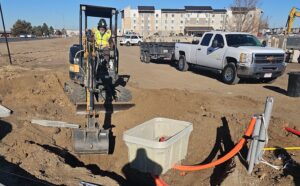
Emergency Response: We Built It. We Stand Behind It.
Fiber networks aren’t static — they’re living infrastructure. When a backhoe hits your main line or a critical splice point fails in a snowstorm, who responds?
If emergency network response is an out-of-state general contractor who subs out splicing and repair, good luck while they try to convince multiple subcontractors to respond. You may wait days for someone to answer the phone, let alone roll a truck to the damage.
At Trace, we own the network after we build it. Our construction crews and splicers are local, equipped, and on-call — ready to respond within hours, not days. We routinely handle:
-
Cut fiber emergency repairs
-
Overnight live network cutovers
-
Fast-response troubleshooting with OTDRs and slicing techs that know the local networks.
It’s not just about speed — it’s about continuity, safety, and accountability. You shouldn’t have to reintroduce your network to your contractor every time there’s a problem.
How We Compare to National Telecom GCs
You’ve probably worked with firms like Black & Veatch, MasTec, or Dycom at some point. These are large national general contractors with name recognition — but when it comes to boots on the ground, their model depends almost entirely on external subcontractors.
Here’s what that typically means for your project:
| Category | National GCs (Sub-Based) | Trace Fiber Services (Full-Service) |
|---|---|---|
| Control | Fragmented across vendors | Unified under one PM |
| Crew Availability | Dependent on sub backlogs | Internal crews with prioritized scheduling |
| Change Order Risk | High – disconnected scopes | Low – integrated schedule/scope |
| Emergency Support | Subcontractor-dependent | In-house, 24/7 fiber response |
| Regional Knowledge | Generic | Deep understanding of Colorado ROW and permitting |
| Schedule Integrity | Vulnerable to handoff delays | Agile, end-to-end ownership |
If you’re trying to build reliable broadband infrastructure in Colorado, it pays to work with someone who knows the terrain — and does the work themselves.
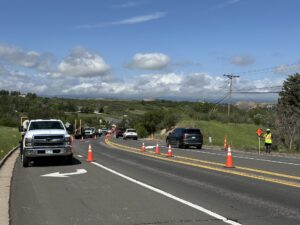
Designed for Colorado. Built to Stay.
From Boulder County’s utility congestion to the tight permitting windows along I-25 and the winter weather in the Western Slope, Colorado isn’t plug-and-play for telecom construction. You need crews who understand the local rules — and have the horsepower to execute safely and quickly.
We live here. We build here. We respond here.
Trace Fiber Services is your full-service telecom contractor for the Mountain West — handling everything from concept to cutover. No finger-pointing, no contractor shuffle, just fast, dependable builds with lasting support.
Want to Move Faster? Start with the Right Partner.
Whether you’re lighting up new fiber miles in Fort Collins, restoring service in Denver, or managing a large-scale build in Pueblo — Trace delivers the speed, continuity, and cost control that only a full-service contractor can provide.
Contact Us to discuss how our integrated approach can accelerate your next deployment.