
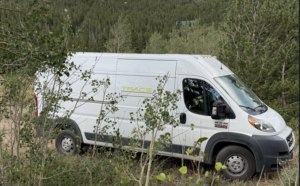
 Project Type: Emergency Fiber Restoration
Industry: Mining / Industrial
Location: Remote Colorado
Scope: Field assessment, fiber troubleshooting, splicing and restoration
Trace Services: Project management, fiber splicing, testing and emergency response
When a fiber outage occurs at a remote industrial site, getting a crew on the road quickly matters. Getting the right personnel on the road matters even more.
Trace Fiber Services recently responded to a fiber outage at a Colorado gold mine where distance, site conditions, and an unknown scope made the initial response particularly important.
Rather than dispatching a splicing crew based on assumptions about the failure, Trace first sent an experienced project manager to the mine to assess the situation in person. That field assessment gave our team the information needed to determine what was wrong, what resources would be required, and how to approach the repair to best support the Colorado mine.
With the scope understood, Trace mobilized the appropriate fiber splicing equipment and personnel to the gold mine to remedy the outage.
It was a relatively focused project, but one that demonstrates an important part of Trace’s capabilities: when fiber infrastructure fails in a remote location, we can assess the problem, determine what the job actually requires, and mobilize the resources to address it.
The Challenge: A Fiber Outage at a Remote Mine
Fiber networks have become an important part of modern mining and industrial operations. They can connect buildings, equipment, communications infrastructure, security systems, cameras, wireless networks, monitoring systems, and other technology spread across a large site. This fiber network is generally aerial on large above ground sites and likely runs all the way down into mine shafts to push connectivity further into the mine.
When that physical network is interrupted, restoring connectivity can become an operational priority.
At this Colorado gold mine, the first challenge was determining exactly what the outage required. The customer (the mine manager) knew that certain parts of the facility were offline, but didn’t know exactly where the damage was.
Remote industrial sites don’t always offer the same predictability as a typical metro-area OSP repair. Existing fiber infrastructure can be highly specific to the facility, and crews may be working hours away from their normal operating base. Arriving without the appropriate equipment, materials, or personnel can turn one mobilization into several. These factors can also be compounded by lack of on-site connectivity. If the network is down and there isn’t any cell coverage, crews can struggle to communicate back to home base to get additional resources mobilized to the site.
Trace’s response started with an on-site assessment.
The Response: Put Experienced Eyes on the Problem First
Trace deployed an experienced project manager from our Denver yard to the mine to evaluate the outage and existing fiber infrastructure firsthand.
Instead of trying to diagnose the situation entirely from a phone call or sending a full crew into the field without a confirmed scope, the project manager could assess conditions on site and determine what would be needed for the repair.
Once that assessment was complete, Trace could build the response around the actual conditions at the mine.
The next mobilization brought the appropriate fiber splicing equipment and personnel to perform the work.
Assess. Plan. Mobilize. Repair.
For remote fiber outages, that sequence can make the response considerably more efficient than just rolling crews or splicers.
The Solution: The Right Resources for the Repair
Fiber restoration requires more than getting a fusion splicer to the jobsite.
Technicians need to understand the existing cable and fiber configuration, safely access the damaged infrastructure, prepare the fiber, complete the necessary splicing, and verify the work. Depending on the failure, a repair may also require cable installation, excavation, enclosure work, or other outside plant construction. Mines and industrial facilities can also have safety programs or briefings that personnel need to complete prior to heading to the damage location.
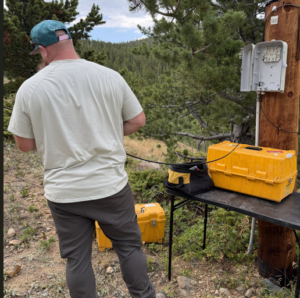
Because Trace combines project management, OSP construction, fiber installation, splicing, and testing capabilities, our team can approach a fiber outage as an infrastructure problem rather than simply a splice.
For the gold mine project, the initial site assessment allowed Trace to match the personnel and equipment to the work that needed to be done. The team then returned to the site prepared to address the outage.
That ability to evaluate first and mobilize accordingly becomes especially valuable when the jobsite is hours away.
Why This Project Matters
The setting makes this project different from a typical fiber repair.
Colorado’s mining and industrial operations aren’t concentrated along I-25. Many are located in mountain communities, on the Western Slope, or in other areas where a contractor can’t assume that additional technicians, tools, or equipment are 30 minutes away.
A remote response requires planning.
It also requires a fiber contractor willing and able to travel to the infrastructure.
Trace’s work at the gold mine illustrates how our team approaches that responsibility. The objective wasn’t simply to dispatch a truck as quickly as possible. It was to understand the problem and then put the right resources in the field to solve it.
Supporting Remote Mining and Industrial Fiber Networks Across Colorado
The same capabilities used for this emergency response apply to mines and industrial facilities throughout the state.
Trace can support private and industrial fiber networks with:
- Emergency fiber outage response
- Fiber troubleshooting and fault location
- Fusion splicing and termination
- OSP network testing or validation (e.g., OTDR, OLTS)
- Fiber cable installation and replacement
- Underground fiber construction – trenching, plowing, and directional drilling / boring
- Light civil construction
- Fiber relocations and network extensions
- Field assessment and project management
That range of capabilities matters because an outage doesn’t always end up being a splicing-only project.
A damaged section of cable may need to be replaced. A new route may be required around active construction. Crews may need to excavate before the fiber is accessible. Testing may identify a problem in a different location than originally suspected.
Trace can bring the construction and fiber expertise together under one response.
Beyond Emergency Restoration
Emergency work is only one reason to bring Trace to an industrial site.
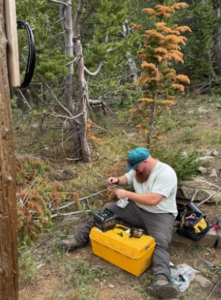
As Colorado mining and industrial facilities add equipment, expand operations, install new buildings, upgrade security systems, or increase their reliance on connected technology, the physical fiber network has to keep pace.
Trace can help operators assess and expand those networks before an outage occurs.
That might mean extending fiber to a new portion of a facility, replacing aging or damaged cable, testing existing strands, adding capacity, relocating infrastructure ahead of construction, or building a new underground route.
For remote sites, having an OSP contractor that can handle both the civil construction and fiber portions of the project can simplify that work considerably.
Need Fiber Support at a Remote Colorado Site?
Whether the issue is an unexpected outage or a planned network expansion, remote industrial fiber work starts with understanding what’s happening in the field.
The gold mine response is a good example of Trace’s approach: send experienced people to assess the problem, determine the resources required, and mobilize a team prepared for the work.
Trace Fiber Services supports mining, industrial, telecommunications, utility, and other critical fiber infrastructure throughout Colorado and the Mountain West.
If your facility needs emergency fiber restoration, troubleshooting, splicing, testing, or new OSP construction, contact Trace Fiber Services to discuss the project.